

Image Credit: Sure Falkland Islands graphic used when the 4G service was launched in 2018
I would like to thank several islanders who told me about this issue. On 25 May 2026, Sure Falkland Islands announced that from 1 June, mobile data speeds would increase from 12 Mbit/s to 30 Mbit/s, a headline improvement of two and a half times current performance. Wow! The Chief Executive of Sure Falkland Islands (Sure) described it as “another important step in improving the everyday digital experience across the Falkland Islands.”
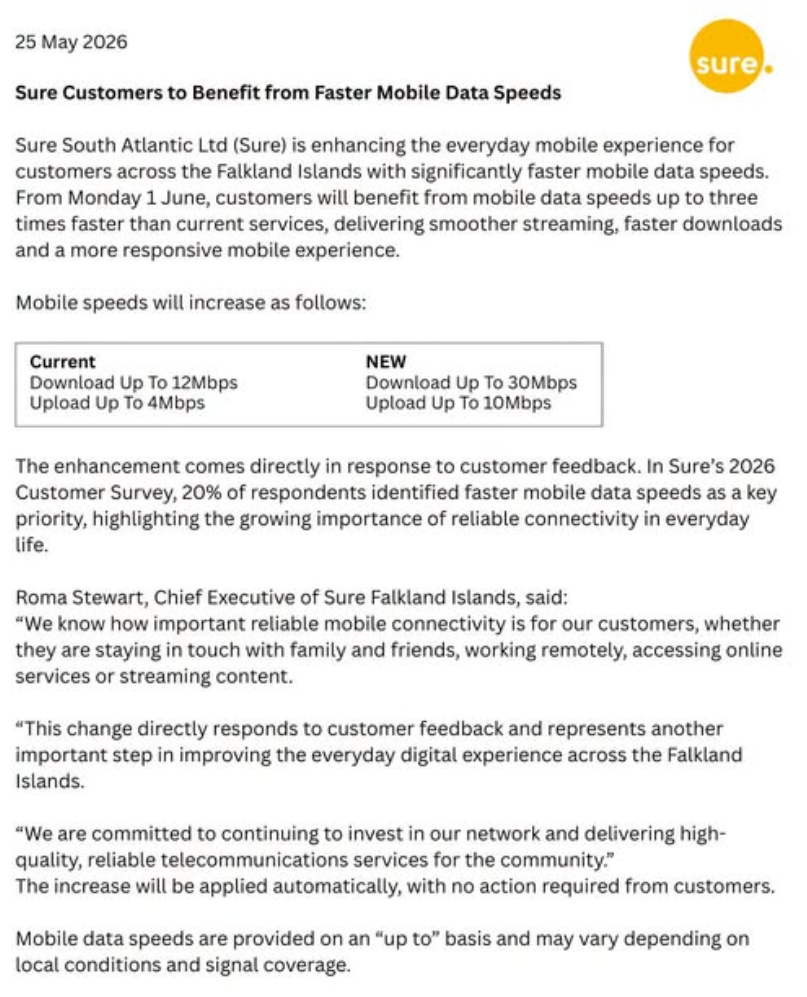
That is a fair description of the speed improvement itself. But speed and usability are not the same thing, and the data quotas attached to Sure’s mobile plans deserve equal attention.
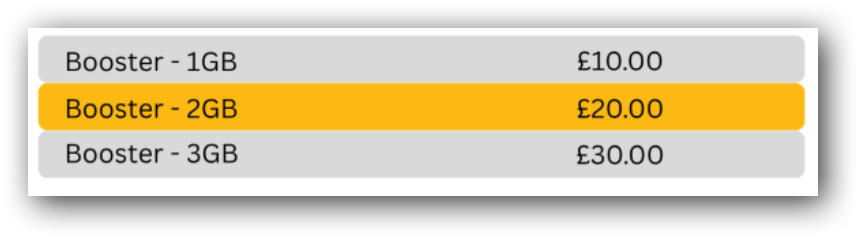
If you do happen to overrun your quota, which I imagine would happen very often, ‘boosters’ can be purchased:
The Numbers Speak for Themselves
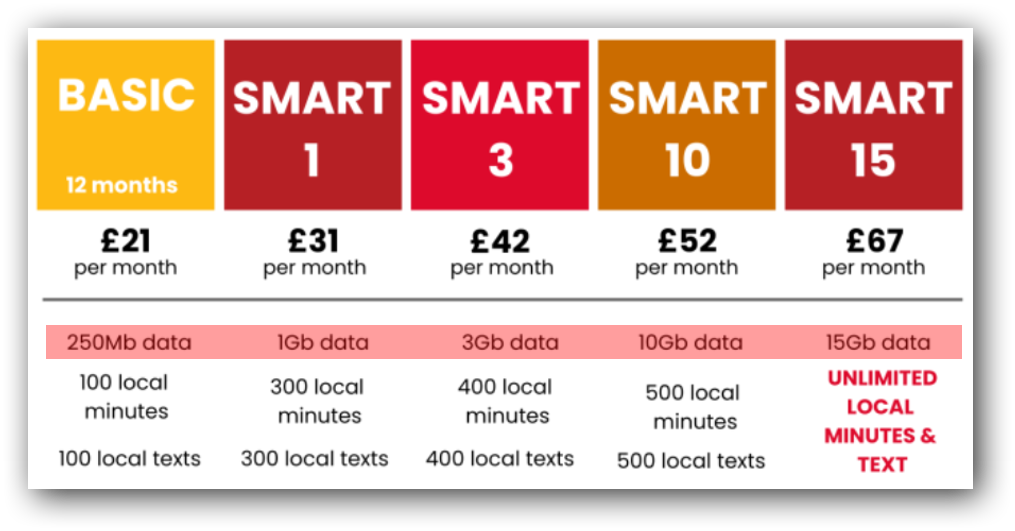
At the new maximum speed of 30 Mbit/s, the theoretical data consumption rate is 3.75 MB per second, fast enough to exhaust Sure’s entry-level Basic plan (250 MB, £21 per month) in approximately 67 seconds of continuous use. The Smart 1 plan (1 GB, £31 per month) would last about 4.5 minutes. Even the Smart 15 plan (15 GB, £67 per month) – the most generous option available would be consumed in just over one hour of continuous use at the headline speed.
Even for more realistic everyday usage, say streaming HD video at around 5 Mbit/s, the unrealistic monthly quotas tell a similar story:
-
-
-
- Basic 250MB — approximately 6.7 minutes
- Smart 1 1GB — approximately 26 minutes
- Smart 3 3GB — approximately 80 minutes
- Smart 10 10GB — approximately 4.4 hours
- Smart 15 15GB — approximately 6.7 hours
-
-
These are not edge cases or stress tests. They are straightforward calculations based on Sure’s own published plans and the speeds Sure is now advertising. The conclusion is unavoidable: the new 30 Mbit/s speed, while genuinely faster, comes with data quotas that bear no meaningful relationship to how people actually use mobile data in 2026.
Why Has the Speed Been Improved?
The timing and context of this announcement are worth examining. Over the past year, a significant proportion of Stanley broadband customers have migrated to Starlink, significantly reducing the load on Sure’s Intelsat geostationary satellite backhaul link to the UK. That link, which previously served a much larger customer base, now has considerably more satellite capacity available. Offering faster mobile speeds costs Sure relatively little in this environment; the capacity was already there, but has been largely underutilised. Of course, the assumption here is that Sure is not utilising its OneWeb-based LEO service, which is currently only deployed at the Malvina Hotel and jetty.
However, it should be borne in mind that if Sure is not using its LEO service as its Internet backhaul, but rather its Intelsat geostationary satellite link, then it is unlikely that 30 Mbit/s download speeds would be anywhere near achievable, hence the traditional “up to” caveat in the announcement.
This is not a criticism of the decision to improve mobile speeds. Reallocating freed satellite capacity to benefit mobile customers is a reasonable step. But it is important to understand what this announcement is and what it is not. It is a reallocation of existing capacity. It is not a new infrastructure investment. Indeed, one islander’s recent anecdote is particularly relevant: “The bigger issue is that in lots of places the mobile network simply doesn’t work”.
The Fixed Network Comparison
Which brings us to the most telling detail in the current picture. Stanley’s fixed broadband network — the copper-based ADSL/ADSL2 infrastructure that serves homes and businesses across the town remains capped at 15 Mbit/s unlimited. The mobile network now offers 30 Mbit/s. The mobile service is now twice as fast as the fixed one.
As OpenFalklands examined in detail in the October 2025 post, ‘Stanley’s Broadband Crossroads: From Copper Legacy to Fibre Future‘, Stanley’s fixed network is legacy, end-of-life infrastructure long overdue for replacement. Unlike mobile speed improvements, which can be achieved by reallocating satellite backhaul capacity, upgrading the fixed network requires genuine physical investment in replacing copper with fibre. That investment has not been made. The fixed network has remained where it has been for years, while mobile speeds have now overtaken it.
The CEO’s statement that Sure is “committed to continuing to invest in our network” will be read against that backdrop.
A Broader Question
Faster speeds with unchanged data quotas are a curious combination. Sure’s mobile customers will now reach their monthly limit more quickly than before, hardly the improvement the press release implies. Until Sure addresses the fundamental mismatch between its advertised mobile speeds and the data allowances that make those speeds usable in practice, announcements of this kind will continue to invite scepticism.
The press release also illustrates a pattern that has characterised Sure’s approach to the Falklands market for some time: visible, low-cost improvements that generate positive headlines, while the fundamental infrastructure challenge in Stanley and Camp remains mainly unaddressed.

Chris Gare, OpenFalklands, June 2026, copyright OpenFalklands

One Reply to “Sure’s 30 Mbit/s Mobile Upgrade: The Numbers Speak for Themselves”